// S03 — Creative System / AI Tooling
Carman OS
The method, made operational.
// The brief
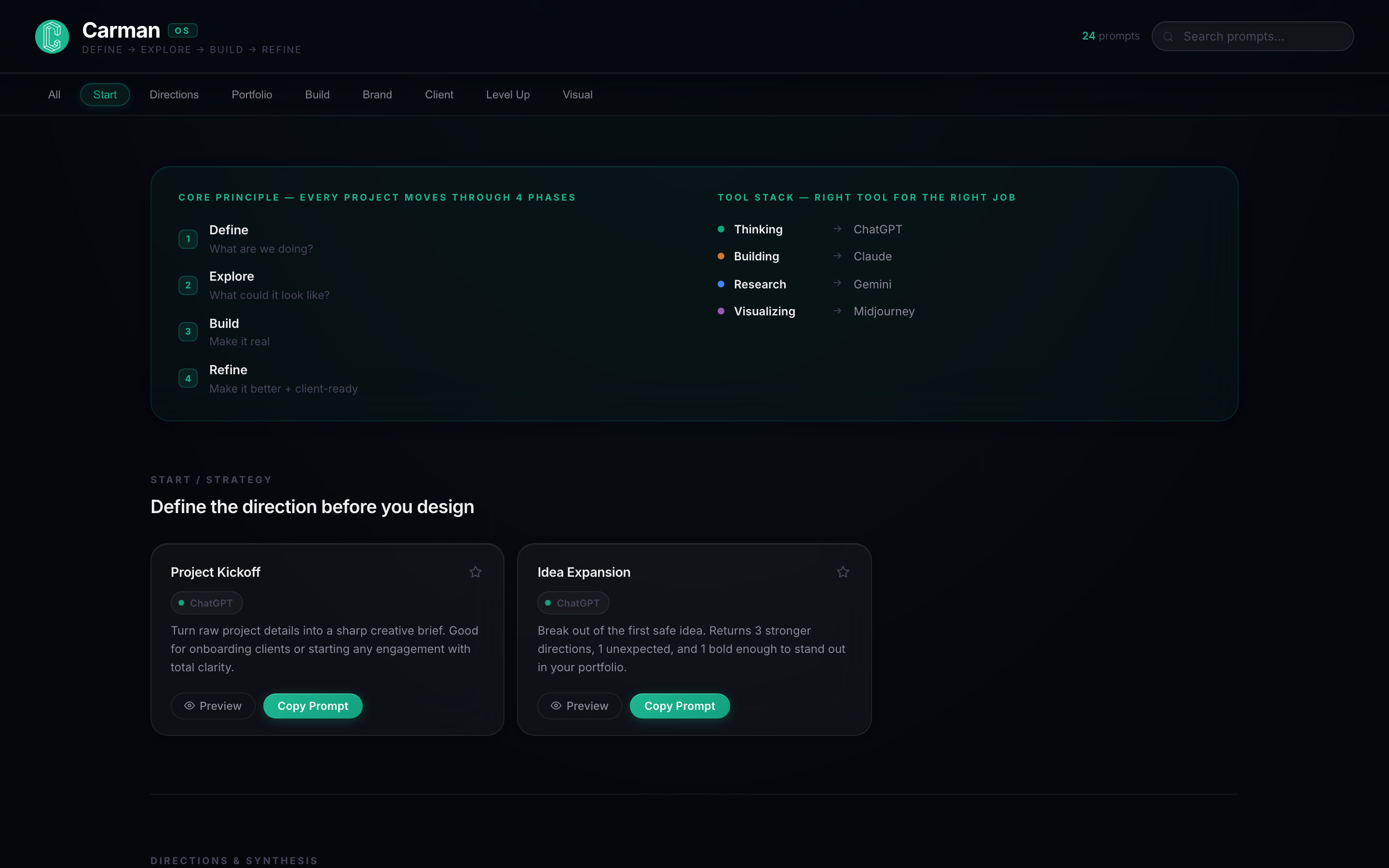
Most prompt collections are a folder of clever one-offs. Carman OS is the opposite: a method first, a library second. Every project moves through Define, Explore, Build, Refine — and each prompt is filed against the phase it serves and the model best suited to run it.
// The challenge
Teams adopt AI one clever prompt at a time. What they end up with is a folder of tricks nobody else can use — no shared idea of when a prompt applies, no agreement on which model to point it at, and no way to tell a genuinely useful one from a novelty. The knowledge stays trapped with whoever wrote it.
Built on my own time, out of my own practice — the prompts are the ones I actually use for client work, portfolio writing, campaign development and critique.
// The work
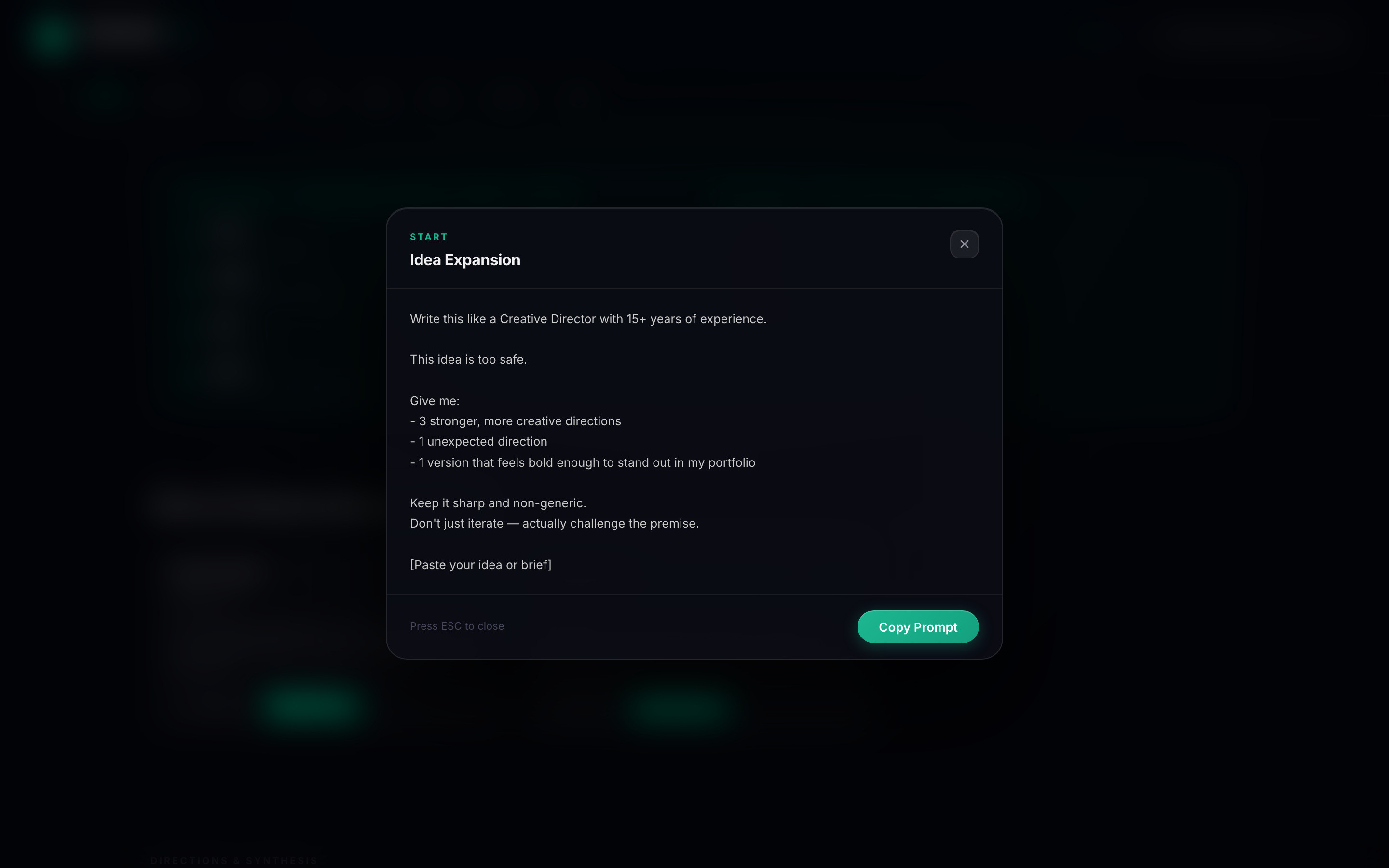
// The mandate
Turn a personal way of working into something structured enough to hand to someone else: a method that says where you are in a project, and a library filed against it.
// John's role
- ↳Defined the four-phase model the whole system is organised around
- ↳Wrote and tested every prompt in the library
- ↳Assigned each prompt to the model that handles it best, and said so on the card
- ↳Designed and built the interface, including search, category filtering and copy-to-clipboard
- ↳Wrote the card copy so each prompt states its output before you use it
The people behind the work
- ↳Self-initiated — concept, writing, design and build by John Carman
// Key decisions
A method, not a folder
The four phases come first and the prompts hang off them. It means the library answers 'where am I in this project?' before it answers 'what should I type?' — which is the question that actually determines whether a prompt helps.
Name the model on every card
Thinking, building, research and visualising go to different models because they genuinely differ. Putting the routing on the card removes the most common failure — a good prompt run somewhere it was never built for.
Say what it returns
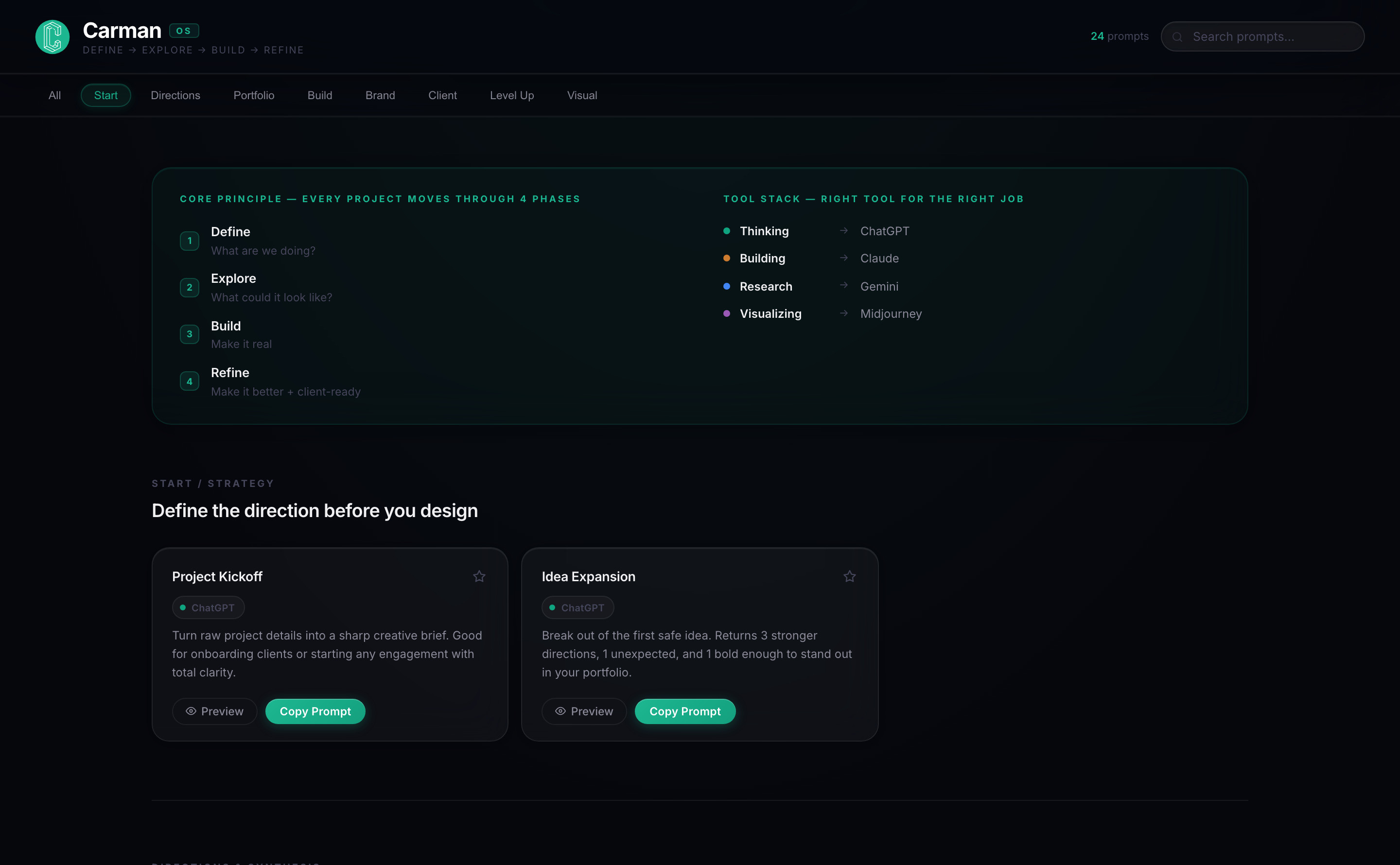
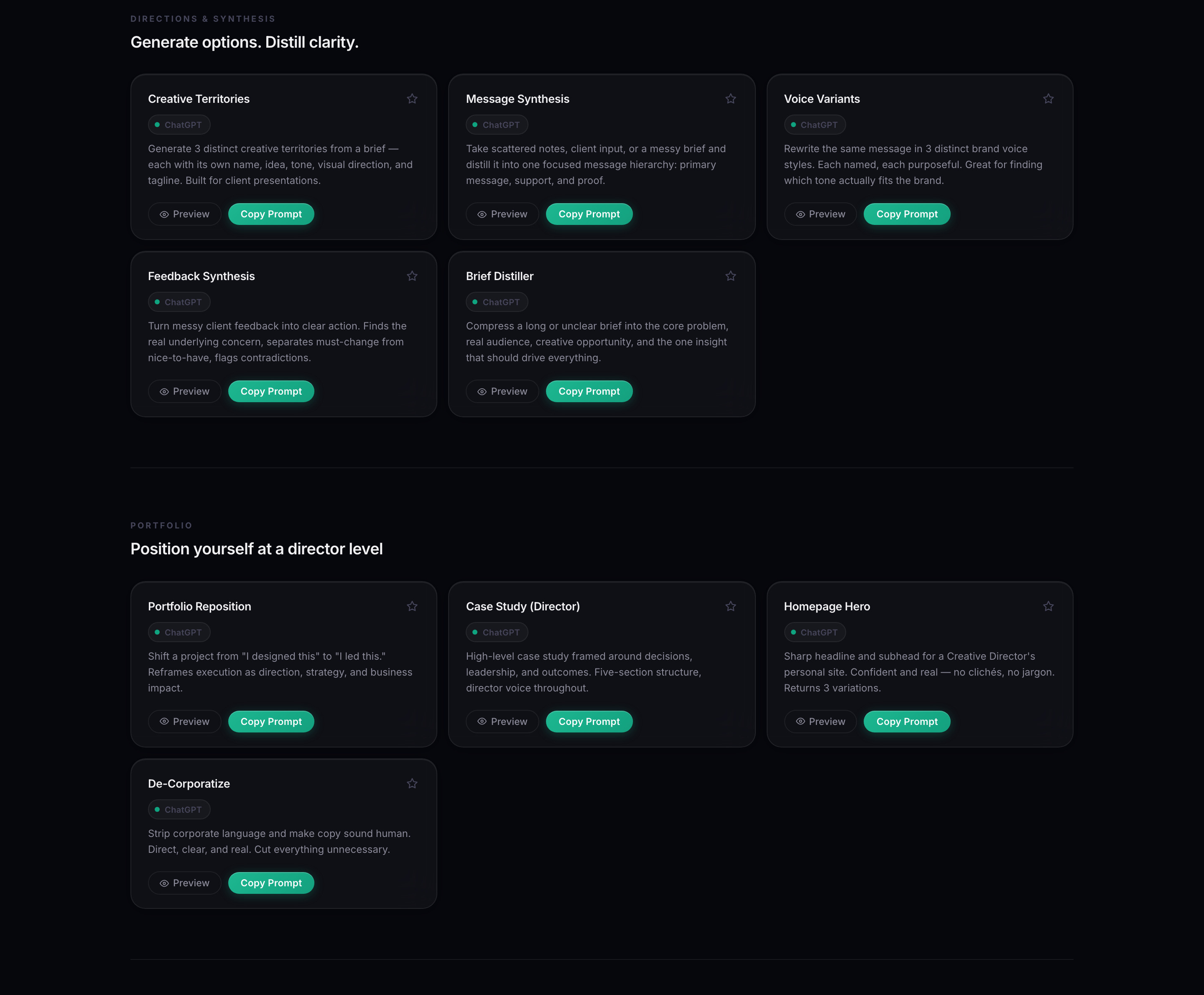
Every card states its output up front: three territories with names and taglines, a message hierarchy with proof, a five-section case study in director voice. You choose by the shape of the result rather than by reading the prompt.
Prompts that push, not just produce
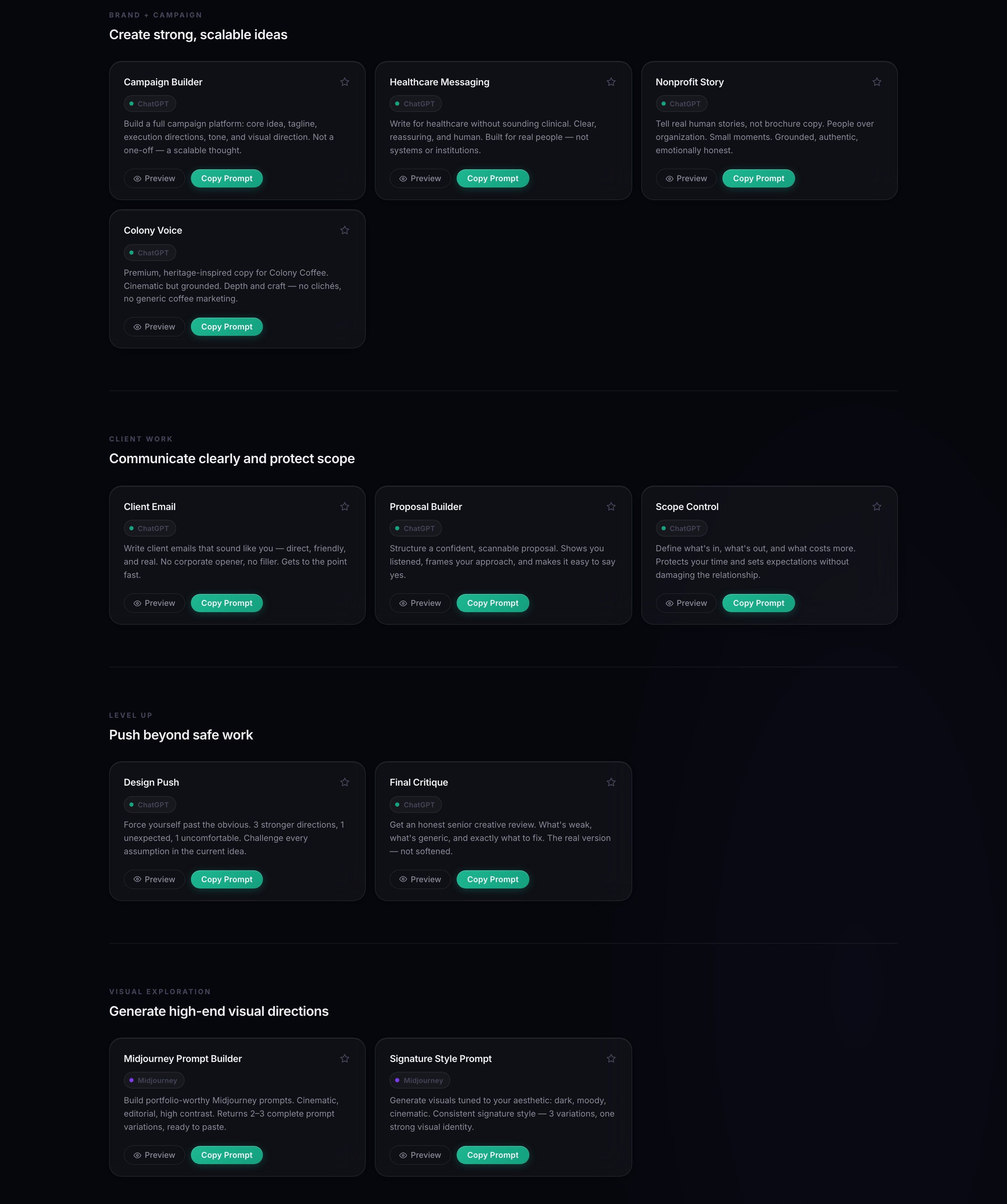
A whole category exists to make the work harder — Design Push asks for one uncomfortable direction, Final Critique returns the unsoftened senior review. AI is easiest to use as a shortcut to the safe answer, and the library deliberately resists that.
// The outcome
- ↳24 prompts live across strategy, synthesis, portfolio, build, brand and campaign, client communication, critique and visual exploration
- ↳A four-phase model that makes the library teachable rather than personal
- ↳In everyday use in my own practice — the case-study and portfolio prompts wrote parts of this site
// Reflection
The useful part was never the prompts. It was being forced to name the phases and admit which model I actually reach for and why. Writing that down turned a set of habits into something I can hand to another designer — and the parts that were hardest to write down turned out to be the parts that were vaguest in my own head.